Why Dog Poop Is Worse for Texas Lawns Than You Think (Heat, Rain, Flies, and Parasites)
By Larry Pillow · · 6 min read
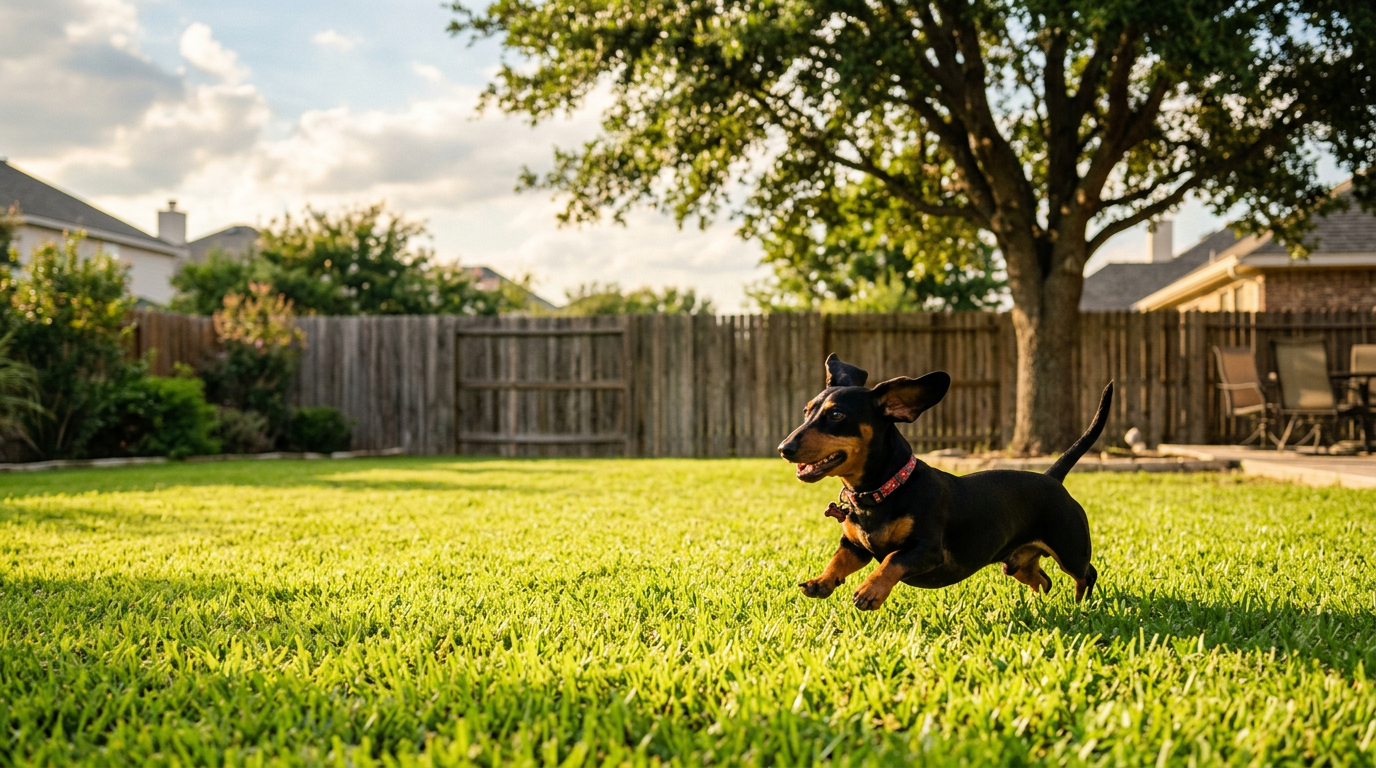
Dog poop is not fertilizer. Left on a Texas lawn, it tends to burn the grass under it, attract flies, and wash into the soil and nearby water when it rains. It can also carry parasites and bacteria that stick around in the yard long after the pile itself is gone.
A lot of people grew up hearing that dog waste just breaks down and feeds the grass. That is mostly true for cow manure in a pasture. It is not true for dog waste in a backyard. Here is why, and why our climate in Waller County makes it worse.
Why dog waste burns grass
Dogs eat a high-protein diet, and their waste is rich in nitrogen. A little nitrogen helps grass grow. A concentrated pile of it does the opposite. It overloads the grass right underneath and leaves the brown or yellow dead spots most dog owners know well.
St. Augustine and Bermuda, the most common lawns in our area, are tough grasses, but they do not like being smothered. A pile left for a week or two blocks sunlight and holds moisture against the blades, which adds to the damage.
What Texas heat does
In the summer, heat dries the outside of a pile into a crust while the inside stays wet. That slows down how fast it actually breaks down. It also makes the smell stronger, especially close to patios, fences, and walls that hold heat.
Heat also speeds up flies. Flies are drawn to dog waste and lay eggs in it, and in hot weather that whole cycle moves fast. If you have noticed more flies around the back door in July, the yard is a likely source.
What heavy rain does
When a big Gulf storm rolls through, rain breaks piles apart and spreads them into the grass and soil. On sloped yards or rural lots, runoff carries waste toward ditches, drains, creeks, and stock ponds.
Pet waste is one of the things local water quality programs ask people to pick up for exactly this reason. Bacteria in the runoff ends up in the same water that drains through Waller County toward the Brazos and Spring Creek.
Rain also makes waste harder to see and harder to pick up later. A yard that goes through a rainy week without cleanup is a much bigger job afterward.
Parasites and bacteria
Dog waste can carry parasites like roundworms, hookworms, whipworms, and giardia, along with bacteria like E. coli and salmonella. Some parasite eggs can survive in soil for a long time, even after the pile is gone.
That matters most for two groups: other dogs, who sniff and lick the ground, and small kids, who play in the grass and put their hands in their mouths. Regular pickup, along with your vet's deworming advice, is one of the simplest ways to cut down the risk. If you have questions about your dog's health, your vet is the right person to ask.
Fire ants and other yard problems
Fire ants are a fact of life here. Waste does not cause fire ants, but a yard that gets walked regularly is a yard where mounds get noticed early. On every visit, if we see a mound, we let you know so you can treat it before your dogs or kids find it first.
The same goes for broken fence boards, holes your dogs are digging, or a gate that does not latch right. A second set of eyes in the yard each week catches small problems before they become big ones.
How often should you pick up?
For most Texas yards with dogs, the answer is at least once a week. Here is a simple guide:
- One small dog, mostly indoors: every other week can work.
- One or two medium or large dogs: weekly.
- Three or more dogs, or toddlers in the yard daily: twice a week.
- After a long trip, a rainy stretch, or before a party: a one-time cleanup.
Tips if you scoop it yourself
If you would rather handle it on your own, a few habits make a big difference:
- Pick up on a set day so it does not slide.
- Walk the yard in rows instead of wandering. It is faster and you miss less.
- Bag waste and put it in the trash. Do not bury it or add it to compost you use on a garden.
- Scoop before you mow, never after.
- Wash your hands and rinse the scooper when you are done.
Let us handle it
If you would rather spend that time somewhere else, LP's picks up every pile, bags it, leaves it in your trash cart, latches the gate, and texts you when we are done. Weekly service starts at $22 per visit. Get your exact price in about a minute, or call or text Larry at (936) 931-7056.
Related: pricing, how it works, and towns we serve.